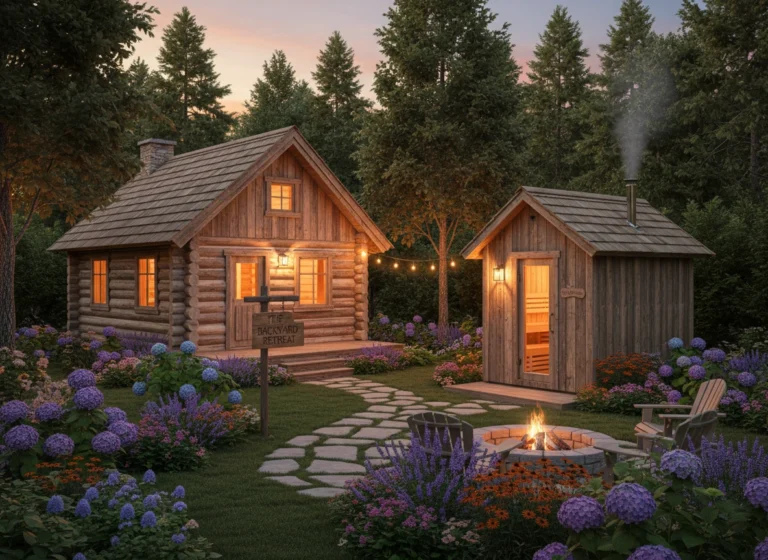
Imagine stepping out of your back door and leaving the noise of daily life behind instantly. You don’t need a plane ticket or a long drive to find tranquility. Instead, you walk down a stone path to a private sanctuary nestled right in your own garden. This is the promise of the modern backyard retreat—a dedicated space designed solely for relaxation and rejuvenation.
As homeowners increasingly look for ways to maximize their living space and improve their quality of life, the concept of the “staycation” has evolved. It’s no longer just about a weekend off; it’s about creating permanent infrastructure for wellness at home. Two elements are leading this charge: the rustic outdoor log cabin and the therapeutic outdoor sauna. While each is powerful on its own, combining them creates a synergy that transforms a simple backyard into a luxury wellness spa.
This article explores how you can merge the rustic charm of a log cabin with the health benefits of an outdoor sauna to build the ultimate backyard retreat.
The Rising Tide of Backyard Wellness
The trend toward functional outdoor spaces has accelerated rapidly. We have moved past the era where a backyard was simply a patch of grass with a barbecue grill. Today, outdoor living spaces are seen as extensions of the home’s interior—often with higher specifications for comfort and design.
Related Fsiblog guide: Best Small Towns for Remote Workers to Buy Property
Data supports this shift. According to the American Institute of Architects, outdoor living areas remain one of the most popular home design trends, with a specific focus on “special function” rooms. Homeowners are craving separation. Open-plan living inside the main house is wonderful for connection, but it often lacks privacy. A dedicated structure in the garden provides a physical and mental boundary from household chores, work emails, and television screens.
By integrating wellness features like saunas into these spaces, you aren’t just building a shed; you are investing in a lifestyle change that prioritizes mental and physical health.
The Heat is On: Benefits of Outdoor Saunas
The sauna is not a new invention. From Finnish savusaunas to Native American sweat lodges, heat therapy has been a cornerstone of human wellness for thousands of years. Bringing this tradition into your backyard offers immediate accessibility to profound health benefits.
Physical Recovery and Detoxification
The most immediate benefit of sauna use is the deep sweat. As your core body temperature rises, your blood vessels dilate, increasing circulation. This enhanced blood flow helps soothe aching muscles, speed up recovery after workouts, and relieve joint pain associated with arthritis. The intense sweating also flushes out toxins and cleanses the skin, often leaving users with a distinct “post-sauna glow.”
Stress Reduction and Mental Clarity
Perhaps even more valuable than the physical benefits is the impact on mental health. A sauna session is a forced pause. You cannot bring your smartphone or laptop into a 175-degree room. This digital detox allows your mind to settle. The heat triggers the release of endorphins—the body’s natural “feel-good” chemicals—which can reduce stress and improve sleep quality.
Immune System Support
Regular sauna bathing has been linked to improved immune function. Some studies suggest that the heat exposure mimics a mild fever, which stimulates the immune system to produce more white blood cells. Having this tool available in your backyard means you can support your health consistently, not just when you visit a spa.
The Rustic Appeal: Why Choose a Log Cabin?
While the sauna provides the function, the log cabin provides the form and the atmosphere. There is an undeniable psychological comfort associated with timber structures. Wood is warm, tactile, and visually calming.
Natural Insulation and Durability
From a practical standpoint, log cabins are excellent choices for outdoor structures. Timber has natural insulating properties, helping to keep the interior cool in summer and warm in winter. This makes a log cabin an energy-efficient partner for a sauna, as it can help retain heat if the sauna is built internally, or provide a cozy changing area if the sauna is adjacent.
Versatility of Use
A log cabin is rarely just one thing. It serves as the anchor for your retreat. It can function as:
- A Changing Room: A private place to robe and disrobe before entering the sauna.
- A Cooling Zone: A comfortable lounge area to relax in between sauna sessions.
- A Social Hub: A space equipped with seating, a mini-fridge, or even a sound system for entertaining friends.
- A Guest House: With the right dimensions, your retreat can double as accommodation for visitors.
The aesthetic of a log cabin also blends seamlessly with garden environments. Unlike metal or plastic structures, timber ages gracefully, often developing a silver-grey patina that looks increasingly natural over time.
The Perfect Pair: Creating the Ultimate Experience
Why combine them? Why not just have a standalone barrel sauna in the corner of the yard?
The answer lies in the “ritual” of relaxation. A standalone sauna is a destination for a specific activity (sweating). A cabin-sauna combination creates an environment for a complete experience.
The magic happens in the transition. The classic sauna cycle involves heating up, cooling down, and resting. Without a cabin, the “resting” phase often means running back into the main house, where you might get distracted by dirty dishes or family noise.
With a log cabin retreat, you have a dedicated “cool-down lounge.” Imagine this sequence:
- Preparation: You enter your log cabin, dim the lights, perhaps put on some soft music. You change into your towel in a warm, dry space.
- The Heat: You step into the attached sauna. You enjoy 15 minutes of deep heat.
- The Cool Down: You step out into the fresh air or a cold shower, then retreat back into the cabin lounge. You lie down on a comfortable sofa, wrapped in a robe, reading a book or simply staring out the window at your garden.
- Repeat: You do this cycle two or three times without ever breaking the spell of relaxation.
This combination allows you to entertain year-round. In the dead of winter, trudging through snow to a standalone sauna can be daunting. If your sauna is integrated into or attached to a log cabin, you have a sheltered buffer zone that makes the experience accessible and enjoyable regardless of the weather.
Designing Your Sanctuary: Tips for Success
Building a backyard retreat is a significant project. To ensure you get the most out of your investment, careful planning is essential.
1. Layout and Flow
Consider the workflow of your sauna session. You need distinct zones: a hot zone (the sauna), a wet zone (for showering or rinsing off), and a dry zone (for relaxing and changing).
- Integrated vs. Separate: You can buy large log cabins with saunas built into the floor plan, which is often the most space-efficient option. Alternatively, you can build two separate structures connected by a deck or covered walkway.
- Ventilation: This is critical. Saunas generate moisture. Ensure your cabin has excellent ventilation to prevent mold and ensure the timber breathes.
2. Materials Matter
For the sauna, stick to traditional hardwoods like cedar, hemlock, or aspen. These woods resist warping under high heat and don’t secrete excessive resin that could burn skin. For the cabin exterior, thicker logs (44mm and up) offer better insulation and longevity than thinner tongue-and-groove paneling.
3. Location and Privacy
Orient your retreat to maximize privacy and views. You don’t want your relaxation room facing the neighbor’s driveway. Use landscaping—tall grasses, bamboo, or trellis screens—to create a secluded pocket in your yard. Also, consider the path from your main house; it should be well-lit and safe to walk at night.
4. Utilities and Foundations
Don’t underestimate the infrastructure. You will likely need:
- Electricity: For the sauna heater (if electric), lighting, and outlets in the cabin.
- Water: If you want a shower or sink.
- Foundation: A heavy log cabin requires a solid, level base. A concrete pad is usually the best option to prevent settling and protect the timber from ground moisture.
5. Budgeting
Costs can vary wildly. A DIY kit might start at a few thousand dollars, while a custom-built, fully plumbed luxury retreat can reach tens of thousands. Remember to budget for the “invisible” costs: electrical hookups, foundation work, permits, and insulation upgrades.
Conclusion: An Investment in You
Building a backyard retreat combining a log cabin and an outdoor sauna is more than a home improvement project; it is a lifestyle investment. It reclaims space for tranquility in a busy world. It provides a venue for family bonding without screens and offers a tangible way to manage stress and physical health.
The value of this retreat extends beyond the monetary increase in property value. The true return on investment is found in the quiet mornings spent reading in the cabin, the deep sleep following a sauna session, and the accessible peace found just a few steps from your back door. By bringing the spa experience home, you aren’t just escaping reality—you are enhancing it.