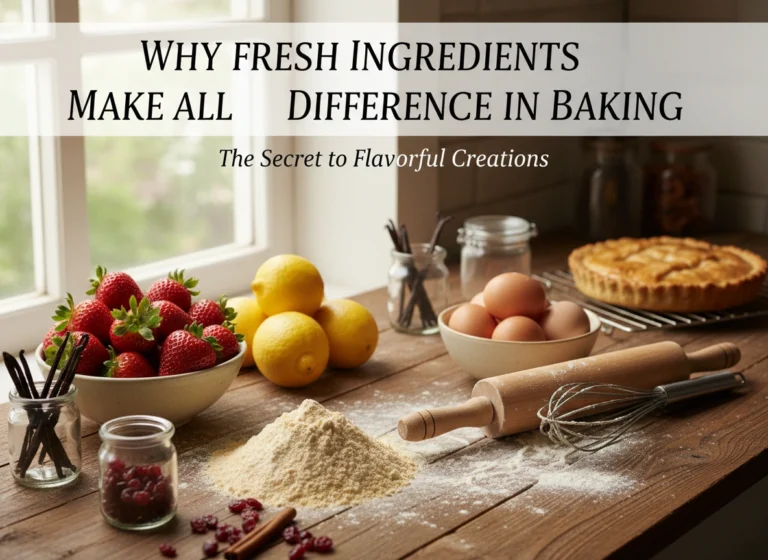
Have you ever wondered why a pastry from a high-end bakery tastes so much better than a store-bought equivalent? The secret often isn’t a complex recipe or a hidden technique. More often than not, the answer is simple: fresh ingredients. While it might be tempting to use that butter that’s been in the fridge for a month or the flour that’s been sitting in your pantry for a year, using fresh components is the single most impactful choice you can make to elevate your baking from good to extraordinary.
This article explores why freshness is the cornerstone of great baking. We will delve into how fresh ingredients dramatically improve flavor, texture, and the overall quality of your creations. We’ll examine the science behind these transformations and provide practical tips for selecting and storing ingredients to ensure every cake, cookie, and loaf you bake is the best it can be.
The Science of Freshness: More Than Just Taste
Baking is a science, a delicate dance of chemical reactions. The freshness of your ingredients directly influences these reactions, determining the final structure, rise, and texture of your baked goods. Older ingredients don’t just lose flavor; they lose their chemical potency.
Think of baking soda or baking powder. These leavening agents work by creating carbon dioxide gas, which makes your cakes and breads rise. Over time, they absorb moisture from the air, which can prematurely activate and weaken them. Using old leavening agents results in dense, flat, and disappointing products. Fresh leaveners, on the other hand, provide a powerful and reliable lift, creating the light, airy textures we all crave.
Related Fsiblog guide: Discover Why Trout and Coffee Make a Perfect Match
This principle applies to nearly every ingredient in your pantry. Fats can go rancid, flour can lose its protein integrity, and eggs lose their binding and leavening power. Freshness isn’t just a preference; it’s a scientific necessity for predictable and delicious results.
Flavor and Aroma: The Soul of Baking
The most immediate and noticeable impact of fresh ingredients is on flavor and aroma. The vibrant, nuanced tastes of your baked goods come directly from the quality of their components.
The Magic of Fresh Butter and Fats
Butter is a perfect example. Fresh, high-quality butter offers a creamy, sweet flavor that is impossible to replicate. As butter ages, it undergoes oxidation, a process where it reacts with air. This leads to the development of off-flavors, making it taste stale or even rancid. A cake made with fresh butter has a rich, clean taste that allows other flavors, like vanilla or chocolate, to shine. One made with old butter will have a subtle but unmistakable staleness that dulls the entire experience.
The same is true for oils. A fresh, light vegetable oil is neutral, while an old one can impart a greasy, unpleasant taste to your finished product.
The Power of Fresh Spices and Vanilla
Spices get their potent aromas and flavors from volatile oils. These oils begin to evaporate the moment the spice is ground. A cinnamon roll made with freshly ground cinnamon has a warm, spicy fragrance that fills the kitchen. One made with a jar of pre-ground cinnamon that’s been open for two years will be a pale imitation. For the most impactful flavor, always buy whole spices and grind them yourself just before use.
Similarly, real vanilla extract or fresh vanilla beans provide a depth of flavor that artificial essence cannot match. The complex, floral notes of pure vanilla elevate a simple sugar cookie or custard from basic to sublime.
Texture and Structure: The Foundation of the Perfect Bite
Beyond flavor, fresh ingredients are critical for achieving the ideal texture, whether it’s a chewy cookie, a flaky pie crust, or a tender cake crumb.
The Role of Fresh Eggs
Eggs are a powerhouse in baking, contributing to structure, leavening, and richness. A fresh egg has a firm, rounded yolk and a thick white that holds its shape. As an egg ages, the protein structures in the white begin to break down. The white becomes thin and watery, and the yolk flattens out.
When you whip fresh egg whites for a meringue or a chiffon cake, their strong protein network traps air efficiently, creating a stable and voluminous foam. Old, watery egg whites are much harder to whip and produce a weak foam that collapses easily. The result is a dense, heavy cake instead of a light, ethereal one.
The Importance of Fresh Flour
Flour might seem like an ingredient with an indefinite shelf life, but it also degrades over time. Whole wheat flour, which contains the oil-rich germ of the wheat kernel, can go rancid within a few months. Even all-purpose white flour will lose its quality. The proteins that form gluten—the network that gives bread its structure and chew—can weaken.
Using fresh flour ensures strong gluten development, which is essential for well-structured breads and pastries. It also guarantees a clean, neutral taste, allowing the other flavors in your recipe to come through without a dusty or stale undertone.
Fruits and Vegetables: The Burst of Natural Goodness
When a recipe calls for fresh fruit or vegetables, like in an apple pie or carrot cake, using produce at its peak is non-negotiable. A fresh, in-season apple is crisp, juicy, and packed with a balance of sweet and tart flavors. An old apple from long-term storage will be mealy, mushy, and bland.
When baked, fresh fruits release their natural sugars and juices, creating a vibrant, flavorful filling. Old produce turns to mush and contributes little more than sweetness. Using fresh, seasonal ingredients connects your baking to the time of year and provides a burst of natural flavor that simply cannot be replicated with canned or frozen alternatives.
Tips for Ensuring Maximum Freshness
Now that you understand the why, let’s focus on the how. Keeping your ingredients fresh is key to unlocking your baking potential.
- Buy in Smaller Quantities: It can be tempting to buy the largest bag of flour or sugar to save money, but if you don’t bake frequently, it’s better to buy smaller amounts that you will use up quickly.
- Check “Best By” Dates: Always check the dates on perishable items like eggs, dairy, and leavening agents. For eggs, you can also perform a float test: a fresh egg will sink in a glass of water, while an old one will float.
- Store Ingredients Properly:
-
- Flour: Keep all-purpose flour in a sealed, airtight container in a cool, dark place. Store whole grain flours in the freezer to prevent the oils from going rancid.
- Butter: Store butter in its original wrapper inside a sealed container in the coldest part of your fridge to protect it from absorbing other odors. You can also freeze butter for several months.
- Eggs: Keep eggs in their carton on a shelf in the main part of the refrigerator, not in the door where the temperature fluctuates.
- Nuts and Spices: The oils in nuts can go rancid quickly. Store them in an airtight container in the fridge or freezer. Keep whole spices in a dark cupboard and grind them as needed.
The Fresh Ingredient Mindset
Embracing fresh ingredients is about more than just following a recipe; it’s a mindset. It’s about respecting the process and being intentional with your choices. Baking with fresh, high-quality components turns a routine task into a rewarding sensory experience. The vibrant colors, the rich aromas, and the superior flavors are your reward for taking that extra step. The next time you decide to bake, take a moment to assess your pantry. Investing in fresh ingredients is an investment in the final product, ensuring that every bite is as delicious as it was meant to be.
Please click here for more info