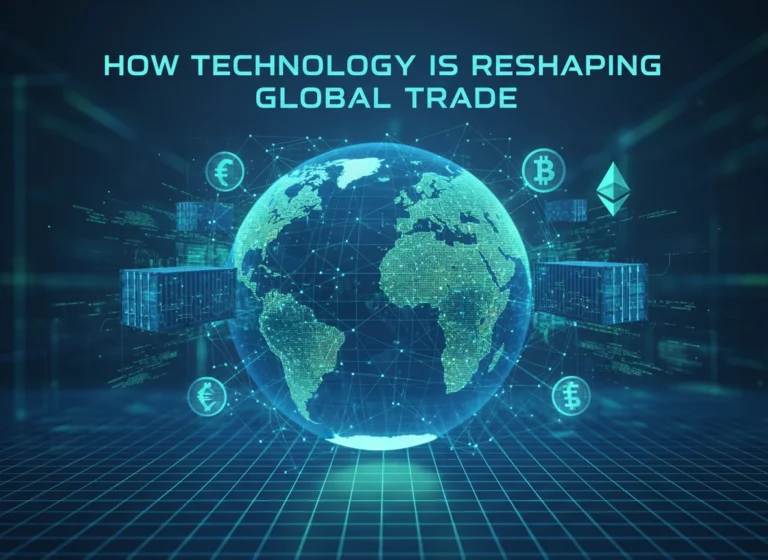
Technology has fundamentally altered the landscape of global trade, breaking down geographical barriers and creating a more interconnected world economy. From the smallest online retailer to the largest multinational corporation, digital tools are driving unprecedented changes in how goods and services move across borders. This transformation affects everything from supply chain logistics and market access to the very nature of international commerce.
The integration of technology has unlocked immense efficiencies, allowing businesses to operate faster and with greater precision. It has also democratized access to global markets, empowering small and medium-sized enterprises (SMEs) to compete on a level playing field. However, this digital shift is not without its challenges. Issues like the digital divide, cybersecurity threats, and the need for new regulatory frameworks present significant hurdles. This article explores the profound impact of technology on global trade, examining both the opportunities it creates and the complexities it introduces.
The Digital Transformation of Supply Chains
Modern supply chains are the backbone of global trade, and technology has made them smarter, faster, and more resilient. Innovations in data analytics, automation, and tracking have revolutionized how products are manufactured, stored, and transported.
The Rise of Smart Logistics
Logistics, the process of managing the flow of goods, has been completely overhauled by technology. The Internet of Things (IoT) is a key driver of this change. IoT sensors embedded in shipping containers, vehicles, and even individual products provide real-time data on location, temperature, humidity, and handling conditions. This constant stream of information allows companies to monitor shipments with incredible accuracy.
Related Fsiblog guide: Techhence: The Future of Wearable Technology
For example, a company shipping perishable goods like pharmaceuticals or fresh produce can use IoT sensors to ensure the items remain within a specific temperature range throughout their journey. If a deviation occurs, an alert is triggered instantly, enabling proactive intervention to prevent spoilage. This level of visibility reduces waste, cuts losses, and improves product quality upon arrival. Major logistics providers like Maersk and DHL have heavily invested in IoT to offer their clients enhanced tracking and supply chain transparency.
Automation in Warehousing and Fulfillment
Automation is another technological force reshaping supply chains. Modern warehouses are increasingly populated by autonomous mobile robots (AMRs) that can pick, sort, and transport goods with minimal human intervention. These robots work around the clock, significantly increasing the speed and accuracy of order fulfillment.
Amazon is a prime example of a company leveraging warehouse automation. Its fulfillment centers use thousands of robots to move shelves of products to human workers, who then pick the required items. This “goods-to-person” system drastically reduces the time employees spend walking across vast warehouse floors, boosting productivity and enabling faster delivery times for customers worldwide. This efficiency is critical for meeting the demands of global e-commerce.
E-commerce and Borderless Markets
Perhaps the most visible impact of technology on trade is the explosive growth of e-commerce. Digital platforms have made it possible for businesses of any size to reach customers anywhere in the world, effectively creating a single, borderless marketplace.
Empowering Small and Medium-Sized Enterprises
Historically, global trade was dominated by large corporations with the capital to establish international distribution networks. E-commerce platforms like Shopify, Alibaba, and Etsy have leveled the playing field. These platforms provide SMEs with the tools to build online storefronts, process international payments, and manage cross-border shipping.
A small artisan in Southeast Asia can now sell handmade crafts directly to a consumer in North America without needing a physical retail presence or a complex export agreement. This direct-to-consumer (D2C) model bypasses traditional intermediaries, allowing producers to retain a larger share of their profits and build direct relationships with their customers. According to the World Trade Organization, SMEs that engage in online trade are, on average, more likely to export than their offline counterparts.
The Role of Digital Payment Systems
The expansion of global e-commerce would not be possible without secure and efficient digital payment systems. Companies like PayPal, Stripe, and Wise have simplified cross-border transactions, allowing buyers and sellers to transact in different currencies with ease. These platforms handle currency conversion, fraud detection, and compliance with various international financial regulations.
By removing the friction from international payments, these technologies have built consumer trust and encouraged more people to shop from overseas merchants. This has fueled a surge in cross-border e-commerce, which is projected to continue its rapid growth.
Challenges and Considerations in the Digital Age
While technology offers enormous benefits, it also introduces a new set of challenges that governments and businesses must navigate.
The Digital Divide
The “digital divide” refers to the gap between those who have access to modern information and communications technology and those who do not. This gap exists both between and within countries. Developing nations often lack the robust internet infrastructure, digital literacy, and financial resources needed to fully participate in the digital economy.
This disparity can exacerbate existing inequalities. While businesses in developed countries can easily leverage e-commerce and digital logistics, those in less connected regions may be left behind. Closing this divide requires significant investment in infrastructure, education, and policies that promote digital inclusion.
Cybersecurity Risks
As trade becomes more reliant on digital systems, it also becomes more vulnerable to cyberattacks. Supply chains, payment systems, and e-commerce platforms are all attractive targets for malicious actors. A successful cyberattack can cause massive disruptions, leading to financial losses, data breaches, and a loss of customer trust.
For instance, a ransomware attack on a major port could halt operations, causing a backlog of ships and delaying the delivery of goods worldwide. In 2017, a cyberattack on the shipping giant Maersk disrupted its global operations for weeks, costing the company an estimated $300 million. To mitigate these risks, companies must invest in robust cybersecurity measures and collaborate to share threat intelligence.
Regulatory and Trade Policy Complexities
The rapid pace of technological change often outstrips the ability of governments to create appropriate regulations. Issues like data privacy, cross-border data flows, digital taxes, and intellectual property rights in the digital space are subjects of ongoing debate.
The European Union’s General Data Protection Regulation (GDPR) is one example of a regulatory framework designed to address data privacy. However, differing regulations across countries can create a complex and fragmented legal landscape for businesses operating globally. Harmonizing these rules to facilitate digital trade while protecting citizens is a key challenge for international policymakers.
The Future of Technology in Global Trade
The integration of technology into global trade is set to deepen further. Emerging technologies like blockchain, artificial intelligence (AI), and 3D printing are poised to bring about the next wave of transformation.
- Blockchain: This distributed ledger technology offers the potential to create a more secure, transparent, and efficient system for tracking goods and processing trade documents. Smart contracts on a blockchain could automate payments and customs clearance once certain conditions are met, reducing paperwork and delays.
- Artificial Intelligence (AI): AI and machine learning will enable more advanced predictive analytics in supply chain management. AI algorithms can analyze vast datasets to forecast demand, optimize shipping routes, and even predict potential disruptions, allowing for more proactive and resilient supply chains.
- 3D Printing (Additive Manufacturing): 3D printing could decentralize manufacturing, allowing products to be printed on-demand closer to the end consumer. This could reduce the need for long-distance transportation of finished goods, shifting the focus of trade from products to raw materials and digital design files.
In conclusion, technology has become an indispensable engine of global trade. It has created a more efficient, inclusive, and interconnected global market. However, realizing its full potential requires a concerted effort to address the associated challenges. By investing in digital infrastructure, strengthening cybersecurity, and developing coherent international regulations, we can ensure that the benefits of digital trade are shared by all, paving the way for a more prosperous and integrated global economy.
Please visit website for more info